



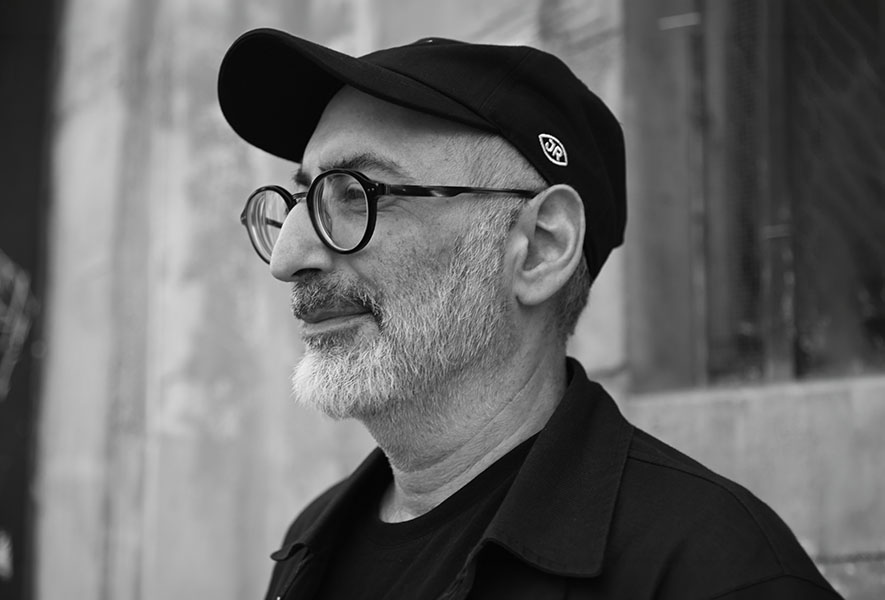
Artist G: From the Neuroscience of Bias to the Architecture of Presence
Before he was an artist, Artist G studied the brain. Born in Lebanon in 1971, he holds a Ph.D. in neuroscience, and for years he taught cognitive science and art theory at a university in Beirut — a position from which he watched, at close range, how the mind constructs bias, category, and belief long before a person is aware of choosing anything at all. It is not a background artists usually claim. But it is the key that unlocks almost everything Artist G has made since.
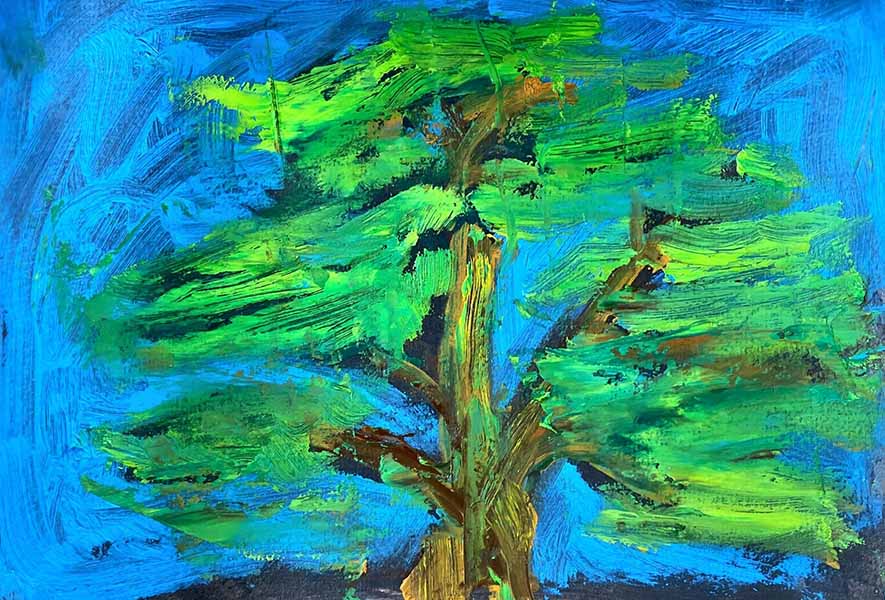
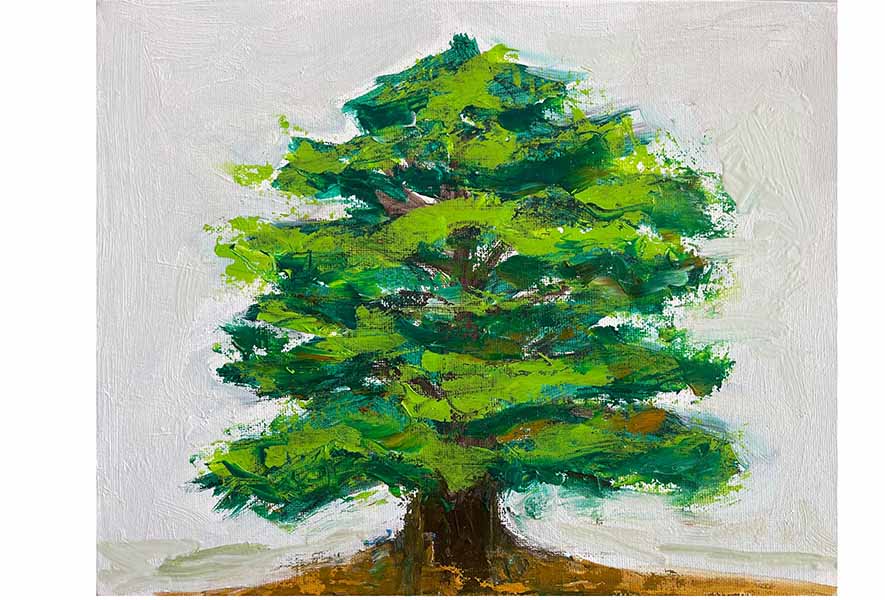
In 2009, he published Can One Man Save the (Art) World?, a book that marked his shift from studying cognition to intervening in the institutions that shape it. A year later came Mr. Obaidi and the FAIR SKIES® Corporation, which took the neuroscience of racial bias and set it directly against the closed logic of conceptual art — not as illustration, but as confrontation. The gesture was already unmistakable: Artist G was less interested in making objects than in making the mechanisms of looking, judging, and valuing visible.
By 2013 he had left the university altogether to work on art full-time. What followed reads less like a conventional exhibition history and more like a two-decade experiment in where the artwork actually resides — and who gets to be part of it.
A career built on other people’s presence
In 2011, invited to the 54th Venice Biennale as curator and commissioner of the Lebanon Pavilion, Artist G created institutional void in the Arsenale — a direct address to Yves Klein’s legacy, and to the empty space at the center of art’s own institutions. It was a rehearsal for the questions he would spend the next decade asking more insistently: who is allowed to be seen, and on whose terms.
The Better World Project, begun in 2013 across Europe and the Gulf states, gathered portraits and interviews from ordinary people rather than public figures — a project he later extended, in 2014, into a Palestine Edition timed to the International Day of Solidarity with the Palestinian People. That same year, working with GulfLabor.org’s “52 Weeks” campaign, he began Signing with Light, a performance-photography project confronting the labor conditions of the migrant workers building the Gulf’s new museum cities — the people whose hands raise the institutions that rarely raise them in return.
The pattern continues in Life Uninterrupted (Italy, 2017), where participants contributed objects, words, and gestures that Artist G rendered as semiotraces — symbolic marks turning an entire room into a shared, authored narrative. Across every project, the same premise holds: the finished object is not the point. The person who steps into the work, and what they choose to leave there, is.
A project bound for space
Since 2020, Artist G has worked under the A R K project — space-bound, quite literally, in intent. Its recent chapter, Power Portraits for Healing, is a series of portraits framed as instruments of emotional and physical well-being, later minted as large-scale mosaic NFTs and auctioned for charitable and institutional causes. Artist G describes the project’s ultimate gesture in strikingly literal terms: the portraits, encoded directly into synthetic DNA, sealed inside a capsule small enough to fit in the palm of a hand — with a trace of each participant’s DNA held within it in a capsule no larger than a fingertip — destined eventually for deep space, following in the footsteps of the Voyager missions and the Golden Records they carry. It’s a symbolic act of sending humanity’s record of resilience — its willingness to be healed, and to be seen — beyond the reach of any single institution or archive on Earth. It is a strange and moving extension of the same impulse that drove his earliest neuroscience-inflected work: the record of a life, or a wound, or a moment of contact, does not have to disappear.
In a 2021 interview with Cittadellarte, Artist G put the purpose of A R K plainly: it is “an archive project intended for the future advent of an artificial intelligence that will ask itself, What is it to be human?”
Now based in Paris and increasingly active online as “A R K by G!” (@theartistGR), Artist G continues a practice that has moved through Beirut, the Gulf, Rome, and Venice without ever quite settling into a single medium — photography, writing, performance, and what he calls meta-artistic intervention all serve the same end.
Why this matters for Human Light
Human Light exists to record the presence of people who are living, right now, before that presence is smoothed into an image the way generative AI increasingly smooths every face into something else. Artist G’s own trajectory — from a scientist mapping how the brain fabricates bias, to an artist who insists that the people in front of the camera are co-authors, not subjects — is an unusually precise mirror of that concern. He does not just document presence. He has spent two decades building structures, from Venice to deep space, designed to make sure it cannot be erased, simplified, or owned by anyone but the person who lived it.
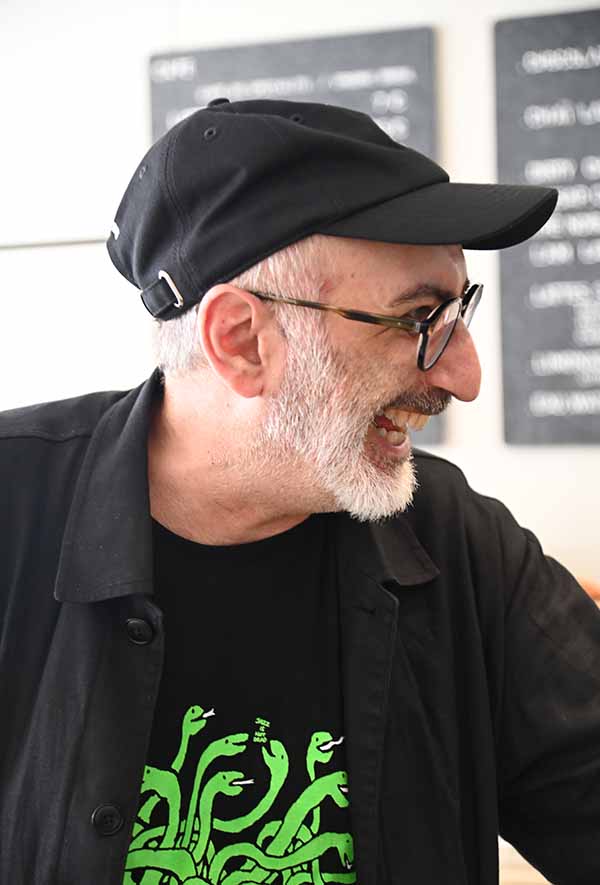
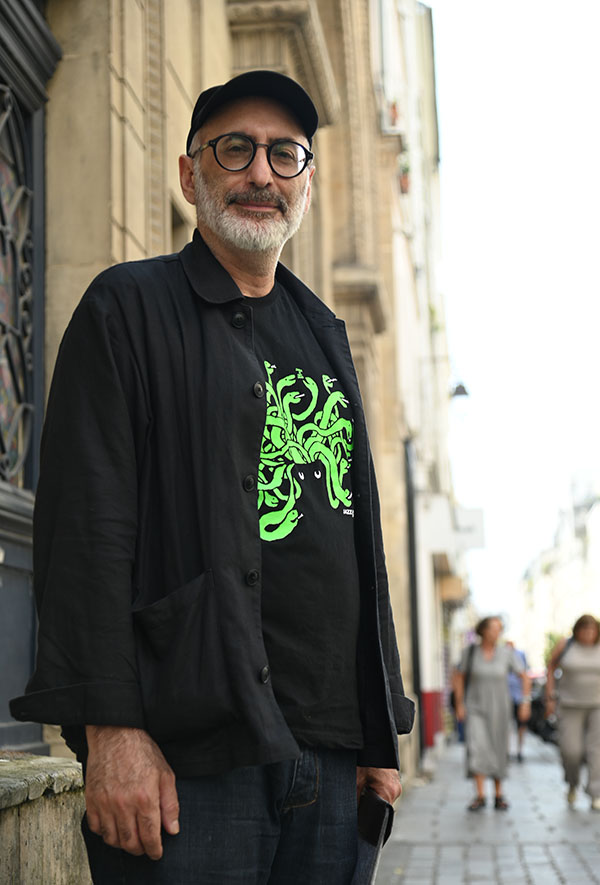
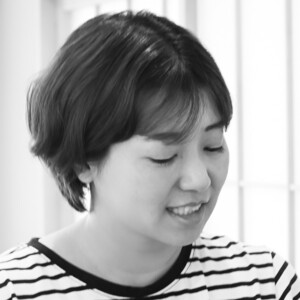
A R K portrait: Lisa Mimura
Artist G! drawing a portrait of Lisa Mimura in a single, unbroken line for A R K.
Each A R K portrait is drawn freehand in one continuous line — a short act of attention held between two people for as long as the sitting takes. Lisa Mimura, founder of My Japan in Hiroshima, was featured in Human Light: Lisa Mimura, My Japan — Kept Alive by Hand.
Photo: Mariko.A / StudioTales
- Le Gang du Zabuton at INALCO 2026 | Human Light
- DJ OOF: The Man Who Collects Light and Mixes It Back

 English
  日本語
日本語  Français