


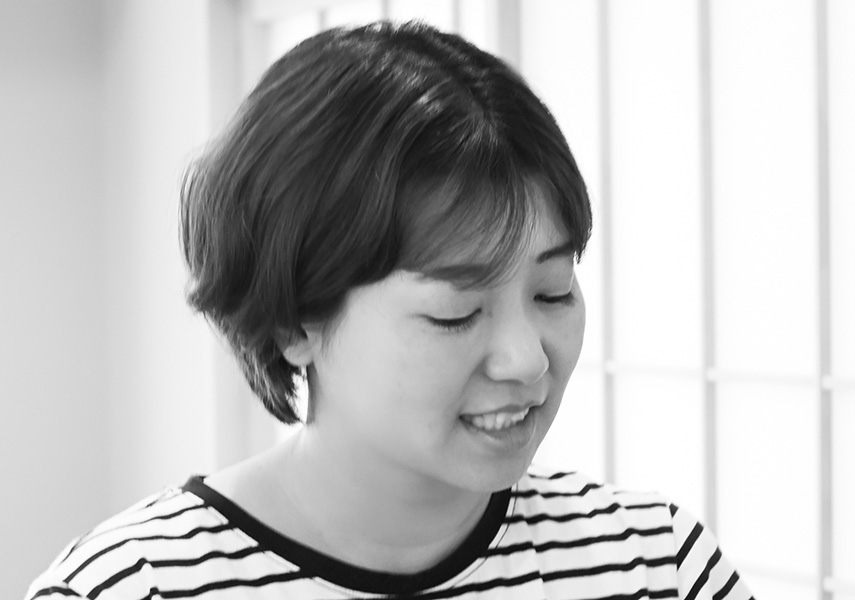
Lisa Mimura, My Japan — Kept Alive by Hand
Based in Hiroshima, the general incorporated association My Japan works to pass Japanese cultural tradition and the appeal of its regions on to the next generation. Its representative director is Lisa Mimura. A festival staged in a shrine, a walk up a mountain at dawn, a brush-making workshop: her work looks, at first, unusually broad. Yet all of it comes from a single aim — to turn culture from something stored away into an occasion that can be touched, and to hand it over. My Japan is the vehicle she built to do this.
From a Brush-Making House in Kumano
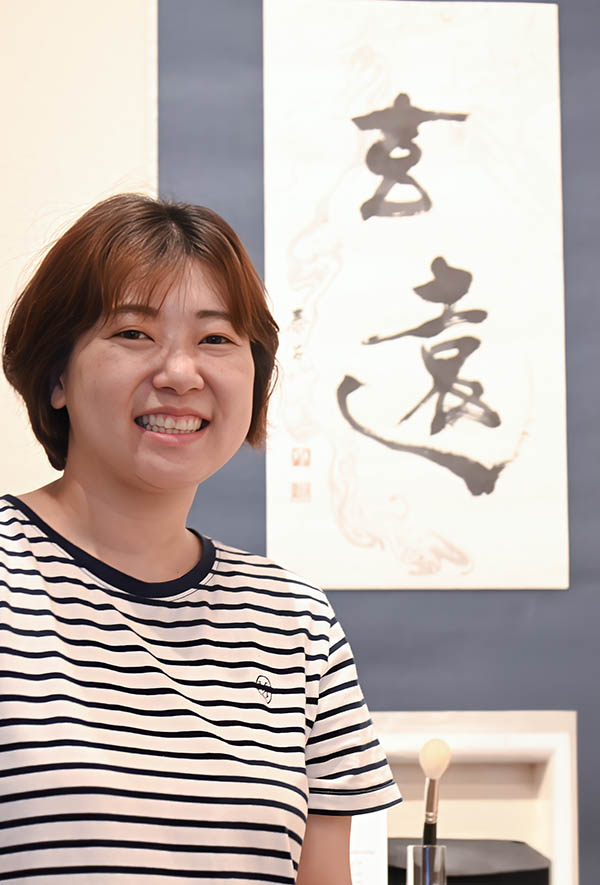
Lisa Mimura was born in Kumano, a town in Hiroshima Prefecture, into a family that makes the Kumano brush. Her family’s workshop, Bunkōdō, has been making brushes for more than a century. Selecting the hair, binding it, setting the base, shaping the tip: to her as a child, the movements of the craftsmen’s hands were not something remarkable but simply part of daily life.
Those who grow up beside a family trade do not always take up its value at once. Mimura came to feel the weight of the tradition after she left Japan. As a student she studied English and went abroad, and there she came up against two facts: that the name Hiroshima was known around the world more than she had expected, and that the image attached to it rested almost entirely on a single point, the atomic bomb. The town’s mornings, its mountains, its food, the handwork carried on there: from a distance, almost none of it was visible.
The same pattern held for the tradition at her feet. Kumano brushes, too, were known by name, yet few people ever held one or touched the craft behind it. To be known is not the same as to be touched. After university she first joined a cosmetics trading company as a salesperson, and later returned to the family business, taking part in brush sales and product development. There she arrived at a conviction: a culture is not kept alive by guarding it alone; it passes to the next generation only as the number of people who engage with it grows. That conviction became the starting point for My Japan.
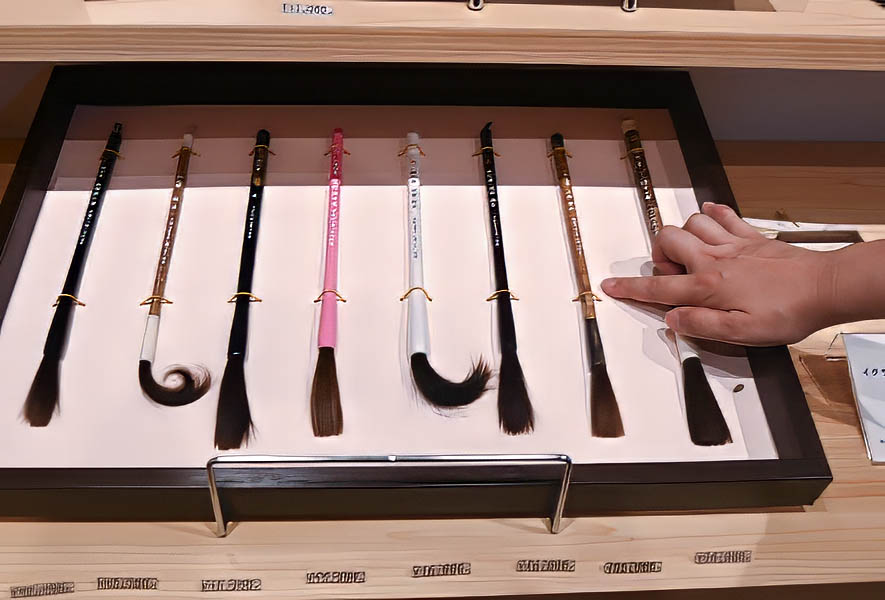
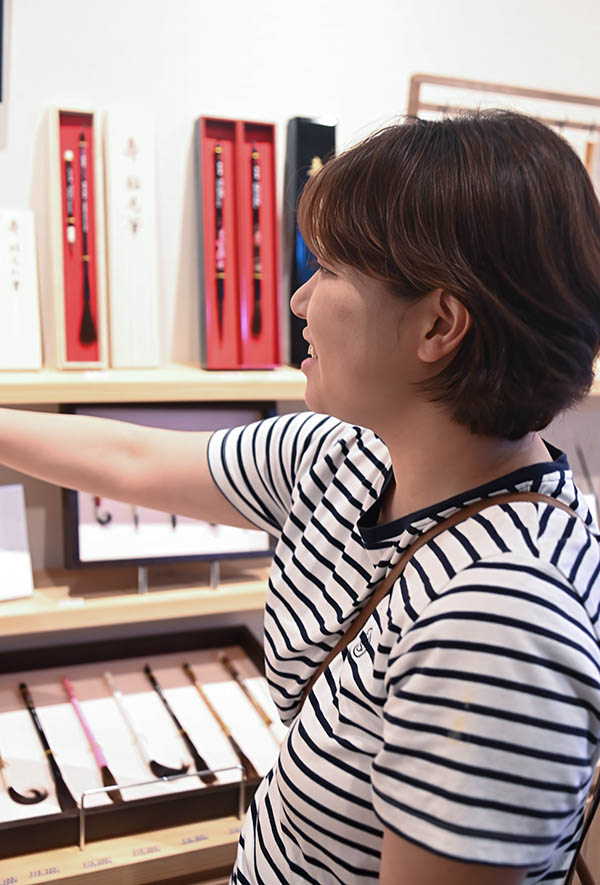
Lisa pointing to her own baby-hair brush (taimōfude)
My Japan, the Vehicle
In 2018, Mimura established the general incorporated association My Japan, though the work itself had begun around 2012. Its role, as she defined it, was to connect the keepers of Japanese culture and regional tradition with the people who want them: to create chances to touch the culture that Japan’s long-held spirit has produced, and to carry it to the next generation. Rather than shut tradition away behind glass, she sought to place it into the hands of those who wish to touch it. For someone raised in a brush-making house, this was a natural idea.
My Japan’s activities appear, at first, to spread in many directions: cultural promotion, festivals staged in shrines, the making of tourism experiences, tree-planting workshops that link cities with rural areas, the upkeep of mountain trails, and talks on community-building. But these are not separate ventures set side by side. They are one principle applied to different settings — that a region’s history and nature should be offered not as something to consume, but as something to take part in. The breadth is not scatter; it is the reach of a single idea.
Turning a Morning into an Experience
That principle takes its clearest form in Asageshiki, the early-morning tour My Japan runs. Setting out on foot from Hiroshima Station, participants climb Mount Futaba at dawn, visit old shrines such as the Toshogu and the Inari, and take breakfast at the summit. Amid a view that reaches as far as Miyajima, tea is served in the open air. The name folds together asage, the morning meal, and the morning landscape, with the intent of turning the hour of dawn itself into an experience. Its theme, “Another face of Hiroshima,” is also Mimura’s own answer to the question she first felt abroad.
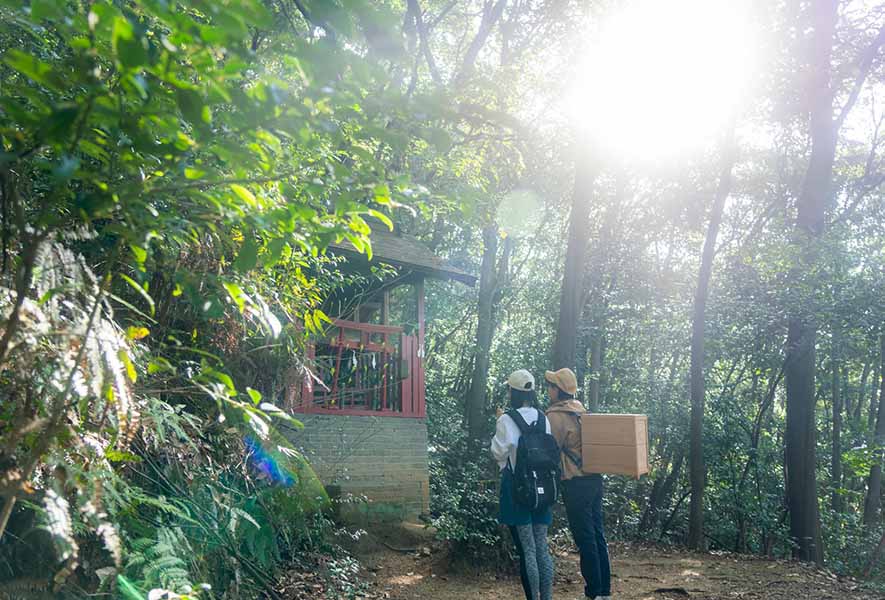
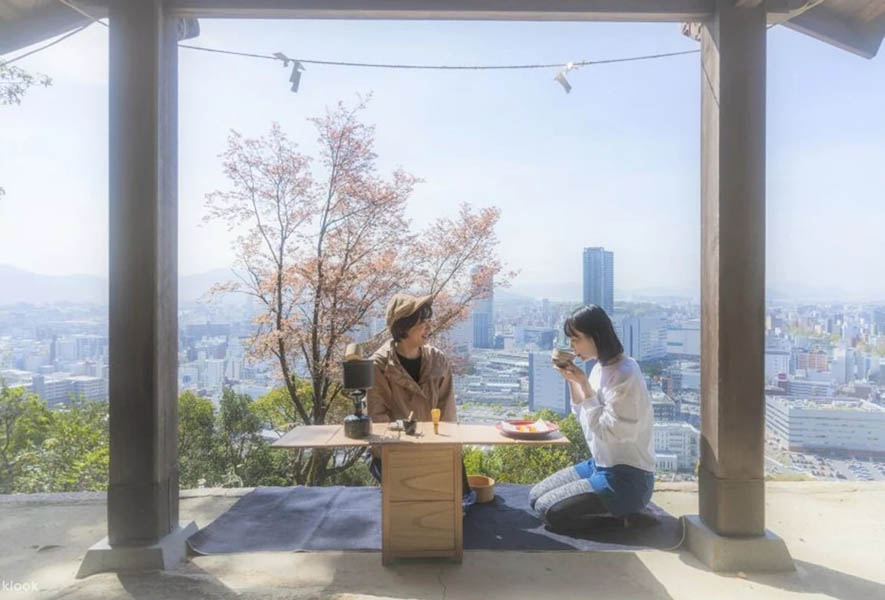
There is a reason the tour begins so early. Hiroshima offered little to do in the morning, and many travelers left without staying overnight. A morning tour encourages an evening’s stay, adding one more night to the town. Part of the tour’s revenue goes toward conserving Mount Futaba, so that visiting becomes a form of tending the land. Tourism turns from something passed through into something one takes part in. This exchange is what My Japan attempts, again and again.
A Return to the Brush
Having widened My Japan’s work outward to all of Hiroshima and to Japanese culture as a whole, Mimura is now returning to where she began: the brush. As a My Japan project, at Bunkōdō, her family’s workshop, she is preparing a place of experience for visitors from abroad. They tour the workshop, watch the craftsmen’s hands up close, make a brush of their own, and then face the paper with it. From brushmaking to calligraphy, it is time received not by looking, but by moving one’s hands.
Here the brush shifts from a product to be sold into an experience made together. The Kumano handwork that could once be seen only from a distance is reproduced, once, in the visitor’s own hands. To make visible what could not be seen from abroad, and to turn what was only a name into something that can be touched: what My Japan has aimed at across all its work comes together in the most personal place of all, the brushes of her own family’s house.
Kept Alive by Hand
Running through all of Lisa Mimura’s work is one quiet conviction about how things are kept. A culture only guarded and displayed grows thin. It passes onward in proportion to the number of people who touch it, make it, and use it. At a festival, on the morning mountain, in the brush workshop, what she does through My Japan is the same: to offer, and to hand over.
A brush is not a tool for looking at. Only when it is held and moved does it become writing. Hiroshima, and the tradition of Kumano, are the same: they endure when they are received into the hand. What Mimura is building, through the vehicle of My Japan, one occasion at a time, is the chance for that receiving to happen.
photo: Mariko.A/ StudioTales

 English
  日本語
日本語  Français